Published by Skills for Justice

Published by Skills for Justice
Date 06.08.25

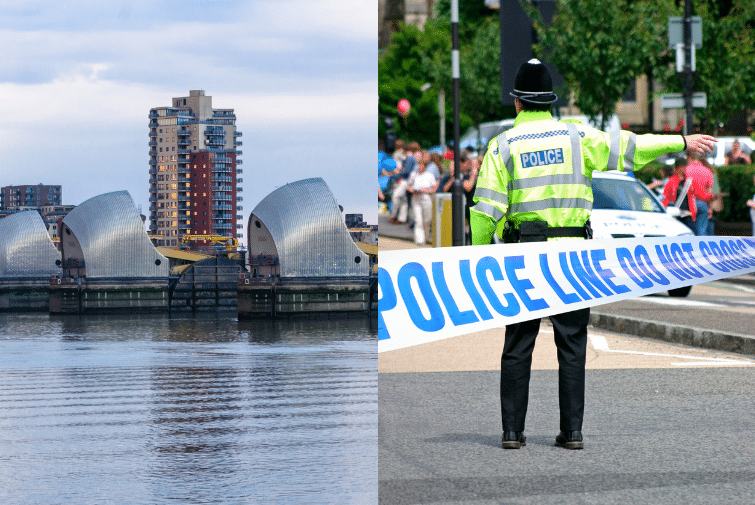
In the justice sector, we often speak about resilience in terms of emergency preparedness or incident response. Whilst these are vital and important parts of operational resilience, they all contribute to a greater whole which is often harder to define.
That broader concept is strategic resilience.
Strategic resilience focuses preparing an organisation for the future by reducing risks, enhancing operational robustness and fostering adaptive capacity. Operational resilience on the other hand, is an organisation’s ability to prevent, adapt and respond to, and recover from adverse events and disruptions.
Strategic resilience involves proactive planning, flexible decision-making, and continuous learning to stay relevant in an ever-changing environment. It’s not just about survival; it’s about long-term sustainability. It focuses on developing long-term capacity, not just to bounce back from incidents, but to evolve. For public sector organisations, this is of particular importance.
Once we move beyond front-line responses and incident containment, the question becomes: how does a service, system, or business build resilience that lasts?
The answer lies in mindset, structure, and culture.
Strategic resilience is built when organisations embed adaptability into policies, operations, and planning cycles. This means being willing to reassess existing models, invest in future-focused capabilities, and shaping environments that favour learning over rigidity.
In public sector organisations, such as those in the justice sector and emergency services, the stakes are high.
Communities rely on these systems not only to respond to today’s challenges but also to function in a reliable way for tomorrow. Building resilience into the strategic layer ensures that responses aren’t just reactive, but they’re sustained, consistent, and fit for the future.
Resilience shouldn’t be a lone effort. It’s not the remit of one department or one crisis team. Strategic resilience flourishes when it’s understood and embraced across every level of an organisation – from executive boards to front-line teams.
This requires two things: clarity of purpose and shared responsibility.
People need to know how their work contributes to the organisations’ resilience.
Do they understand the systems they are part of? Are they empowered to take risks early and propose solutions? Is there a culture that supports agility and cross-functional collaboration?
When resilience is everyone’s business, it becomes a collective strength, rather than just a policy.
Today’s world is far from short of disruption. From climate change and political shifts to economic volatility and digital transformation, organisations today are challenged on multiple fronts. And while we can’t predict every eventuality, we can prepare and absorb them without losing our sense of direction.
That’s why investing in a resilience strategy is crucial. Whether you’re mapping interdependencies, stress-testing systems, or embedding learning reviews across programmes, strategic resilience become real when it’s planned, resourced, and implemented intentionally.
Don’t wait to elevate your organisations’ resilience from a reactive afterthought to a core strategic capability, one that positions you to serve your community more effectively, sustainably and confidently during times of uncertainty.
Ready to future proof your organisation? Skills for Justice can help you with developing and implementing a robust resilience strategy. We’ll help you assess where you are today, identify the skills and systems you’ll need tomorrow, and support you to build a stronger more resilient future.

Get in touch with us today to find out more.