Published by Skills for Justice

Published by Skills for Justice
Date 10.07.25

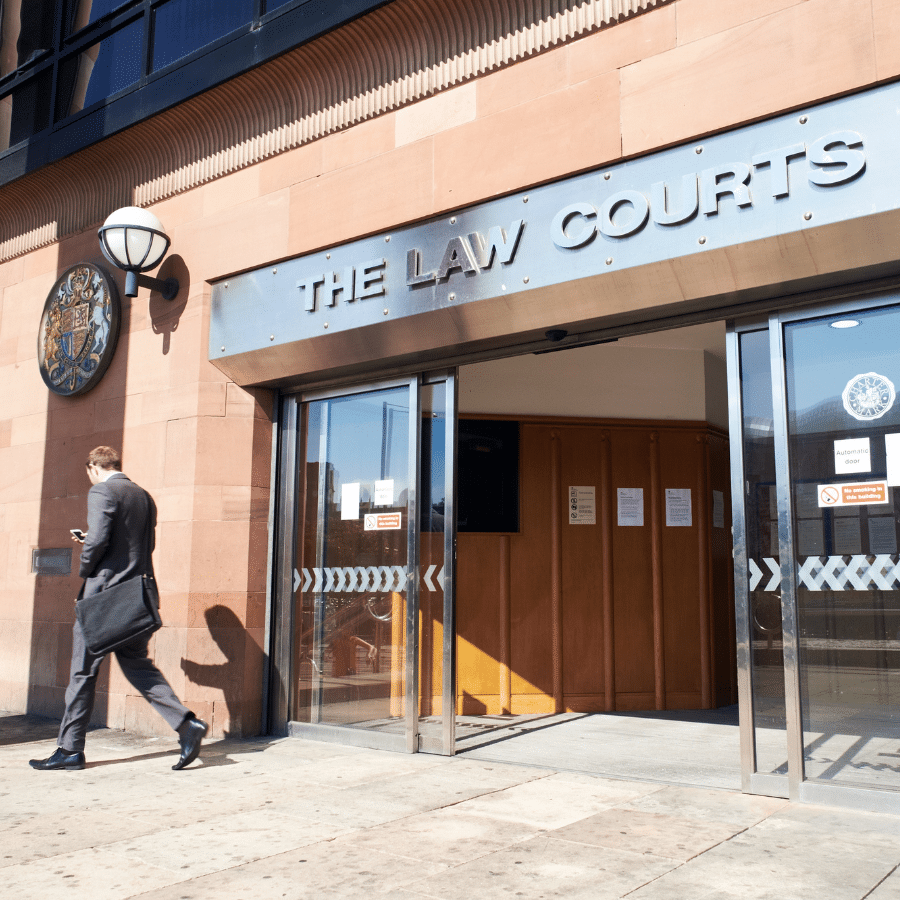
Martyn’s Law, introduced in the UK to improve security at public venues, will have far-reaching consequences, not only for businesses and event spaces but also for justice sector venues such as courts. This legislation, officially the Terrorism (Protection of Premises) Bill 2025, mandates heightened security measures at public venues to help prepare for, respond to and prevent terrorist attacks and ensure public safety. While the law primarily focuses on venues like arenas, stadiums, and shopping centres, its implementation will also have an impact on court security, raising public safety, but may also impact legal proceedings and the burden on judicial systems.
We explore what these impacts are and how courts can prepare for the regulations coming in to force.
There will be an immediate need to strengthen security measures in courts. Given the importance of ensuring safety in a judicial environment, and the sensitive nature of many of the cases heard, courts may need to invest in more advanced security technologies and physical protections – such as metal detectors, body scanners, increased surveillance technology, and reinforced barriers.
Many courts, especially larger ones, will already have these in place. But smaller courts may need to monitor capacity and implement changes in light of the new legislation.
There is a greater need for security measures and procedures under the new legislation, meaning that facilities will need to carry out more detailed risk assessments and have security plans in place bespoke to the building environment.
An added complication for courts will be security measures for different groups of individuals who can’t mix, whether evacuating or invacuating. For example, defendants who may need to have detained removal, jurors who can’t mix with other trial participants (to prevent contamination or intimidation), witnesses who need to be protected, and so on.
The physical layouts of courtrooms may need to be altered in order to meet security measures – for example to build secure areas for witnesses, victims, or high-profile defendants to ensure their protection. Courts may also install security or communications equipment.
Courts may also look to introduce tighter access controls, such as restricting the number of entry points, or reconfiguring screening areas.
One of the potential impacts may be that we see a rise in the number of virtual proceedings, particularly in high-risk cases. Remote testimony or trials could be implemented to reduce the risk of physical threat whilst maintaining integrity of legal proceedings – although there has been concern that remote trails do not work as well in criminal, county, family and complex cases. Whilst video technology exists in 70% of courtrooms, there is further digital transformation that could be made in this area in light of the new security regulations.
The new legislation will require new plans and process to be put in place – meaning court facilities will need to spend time carrying out security reviews and risk assessments or running drills and exercises. Beyond this, the potential requirement for equipment and physical alterations to buildings, plus the need to train individuals on any new measures or for the operation of more advanced security equipment, diverts budget away from the day-to-day operations of case management and sitting sessions.
For many people, courts can be intimidating spaces, especially for victims and survivors. By increasing security measures, the legislation may increase the sense of confidence that individuals have in visiting court. If the environment feels more secure there may be a knock-on effect on reducing disorderly behaviour, and increasing participation in court proceedings, particularly for sensitive cases.
Aside from the location aspects, public perception will also be shaped at a societal level on how courts respond to and process security breaches or attacks. By using the new legislation and holding venues to account for any lapses in security it may increase confidence in justice and the rule of law.
In response to security breaches or attacks, one of the impacts may see an increase in the number of legal challenges and civil claims processed through the judicial system. The introduction of new legislation and offenses does not always lead to an increase in the number of cases bought forward, but this will be something for the court system to consider when planning capacity and case management strategies into the future.
In addition, the judiciary will need to interpret the new law in light of any cases brought forward for the first time. Courts will need to consider whether security measures and processes were fit for purpose based on the principles-based legislation to determine civil litigation, as well as organisational liability and negligence. This may also involve greater use of security expert witnesses, with courts having to adapt to better understanding and clearer rules regarding the admissibility of testimony, as well as how to weigh expert opinions in a legal context.
It will be an ongoing challenge for judges to balance public safety concerns with the rights of businesses and individuals as precedent begins to take shape.
Martyn’s Law increases the responsibility for public venues in public safety by aiming to make sure they have plans in place to prepare and respond to potential threats, representing a societal shift towards preventative measures and resilience building. How they deal with the legislation may have a far-reaching impact by influencing the future of public safety measures – for example, by identifying gaps and inadequacies in regulatory requirements that governments and security regulators may look to close. In addition the precedents set may influence other industries and premises to adopt robust security measures, even if they do not fall within the scope of the regulations.
The full impact of Martyn’s Law on the courts will unfold over time, but its influence will be felt for years to come, as public safety and legal accountability become ever more intertwined in the UK judicial system. It remains to be seen what, if any, burden there will be on court operations considering the greater attention and resources required for physical court locations themselves to comply with the new legislation.

Stay in the loop with the latest impact of Martyn’s Law in the justice sector. Sign up to our newsletter.