Published by Skills for Justice

Published by Skills for Justice
Date 29.07.25

The term resilience is used across a number of discourses and disciplines, and in the workplace, it can be hard to pin down exactly what it means.
How can justice sector organisations take a complicated set of principles and meet growing demands for resilient public services? Especially as often our understanding is based on the immediate area that we work in – normally meaning incident response and emergency preparedness.
An important starting point is understanding the main types of resilience, and how they work together to build capabilities within the workforce and within public services.
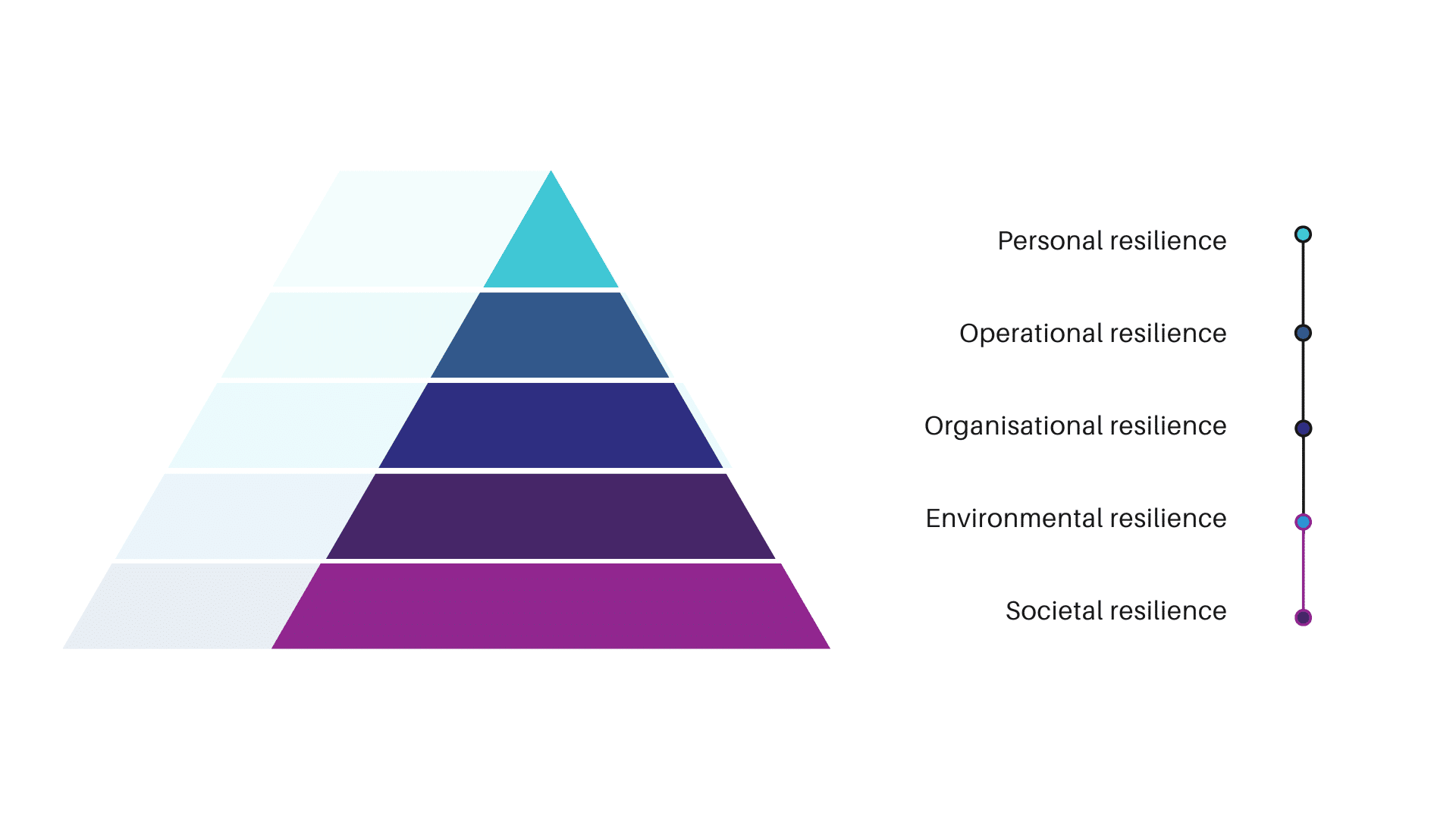
The most common types of resilience are:
Environmental resilience is usually concerned with the climate emergency and the stability of the natural world. It is an important part of ESG (Environmental, Social and Governance) principles, and most organisations have carbon reduction or net zero plans in place, which have become a supply chain requirement for providers and contractors for public sector organisations.
As the understanding of resilience has grown over time and efforts are becoming more mature, the concept of societal resilience has become a core part of resilience in the justice sector. The UK Resilience Framework 2022 , and the launch of the UK Resilience academy both stress the need for a whole-of-society approach to resilience.
The updated suite of civil contingencies related National Occupational Standards (now called the Resilience and Emergencies suite of NOS) was a core effort in moving to a whole-of-society approach to resilience. The consultation engaged with over 30 sectors, expanding the reach of resilience competencies far beyond the scope of emergency services.
Organisational resilience is the ability of organisations to withstand change without loss of function. In light of the Covid-19 pandemic, it makes it easier to see how this is a vital part of contributing to societal resilience. This is a well-developed and common concept across industries, underpinned by technical standards such as ISO22300 and BS65000. These standards define organisational resilience as the ‘ability to absorb and adapt in a changing environment’ (ISO22316).
Operational and organisational resilience are often considered the same thing, but there are important differences. Operational resilience focuses on maintaining the provision of services during disruptive events, and organisational resilience focuses on long-term adaptability of the systems and workforces.
This has largely been the focus of regulation relevant to the justice sector in the past, such as civil contingencies, emergency preparedness, incident response and command, exercising, and business continuity. However operational resilience practice is context dependent, with, for example, different regulations and guidelines in the financial services sector coming into force in 2022.
Cybersecurity is a huge industry globally and in the UK. It is a type of operational resilience, ensuring that systems can repel cyber-attacks and maintain the integrity and safety of essential data and systems in use across the justice sector. A growing area of interest in cybersecurity is software resilience – not just protecting the security of systems, but also protecting against vulnerabilities introduced through risks such as legacy systems.
In the workplace, personal resilience is all about wellbeing and the ability to be emotionally and mentally resilient to challenges and changes. Many HR and organisational development teams have this as a core part of their employee services, with 84% reported to have measures such as employee assistance programmes in place.
This is also the type of resilience that is in broad public use and so may be the first thought that comes to mind when the term is mentioned.
However, personal resilience can also relate to individual preparedness to emergencies. The government’s Prepare campaign is a good example of this.
You could view these different types of resilience as part of a hierarchy which supports the development and understanding of a whole-of-society approach to resilience efforts. As resilience capabilities develop across the economic and social landscape, it will be interesting to see how different aspects of resilience filters through to public and working life consciousness and discourse.

Explore our case study to understand how we supported a comprehensive review of the National Occupational Standards for Resilience and Emergencies.