Published by Skills for Justice

Published by Skills for Justice
Date 18.07.25


These two terms are often used within organisations, but understanding the relationship between them is often lost when it comes to workforce planning and development. Below we take a look at what each really means within an organisational context, what the relationship between them is, and why they are core underpinning elements for your organisational resilience.
Capability is about the skills, knowledge and behaviours – ultimately the competencies – that your workforce has. In workforce planning, it is understanding the skills, knowledge and behaviours that your people have and what level of holistic competence they have in completing tasks.
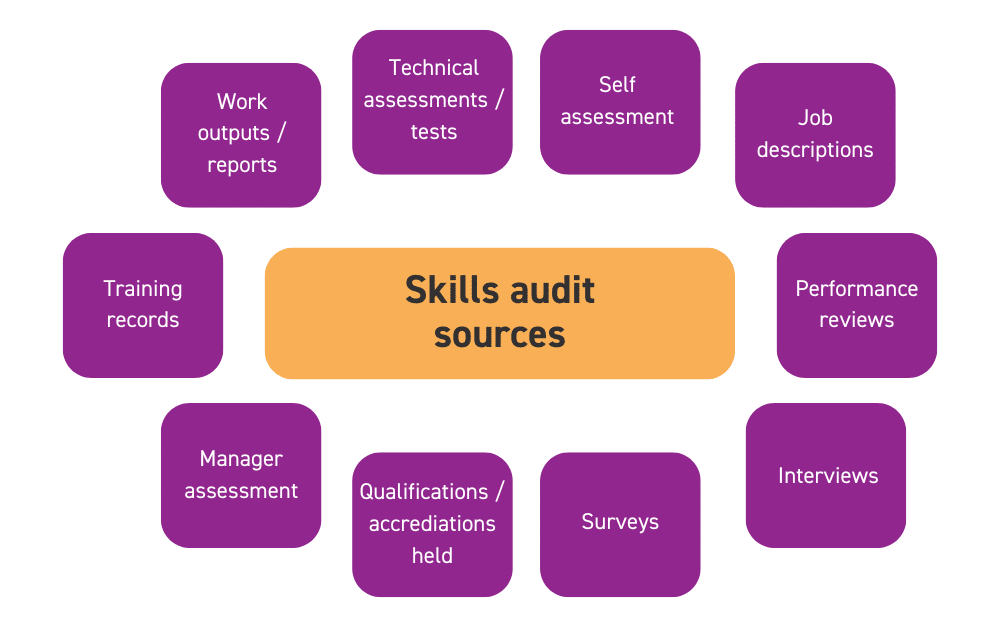
There are a number of ways that organisations can look to understand this. For example, by using National Occupational Standards, competence and skills frameworks, or by carrying out a skills audit using a full range of external and internal information.
Capacity is the other half of the picture. It is about the amount of time and resource that your workforce has to carry out the tasks that they are skilled to do. Whilst on paper a service or job role may look fully resourced, without understanding capacity levels, the individual or service may not be able to meet the current demand.
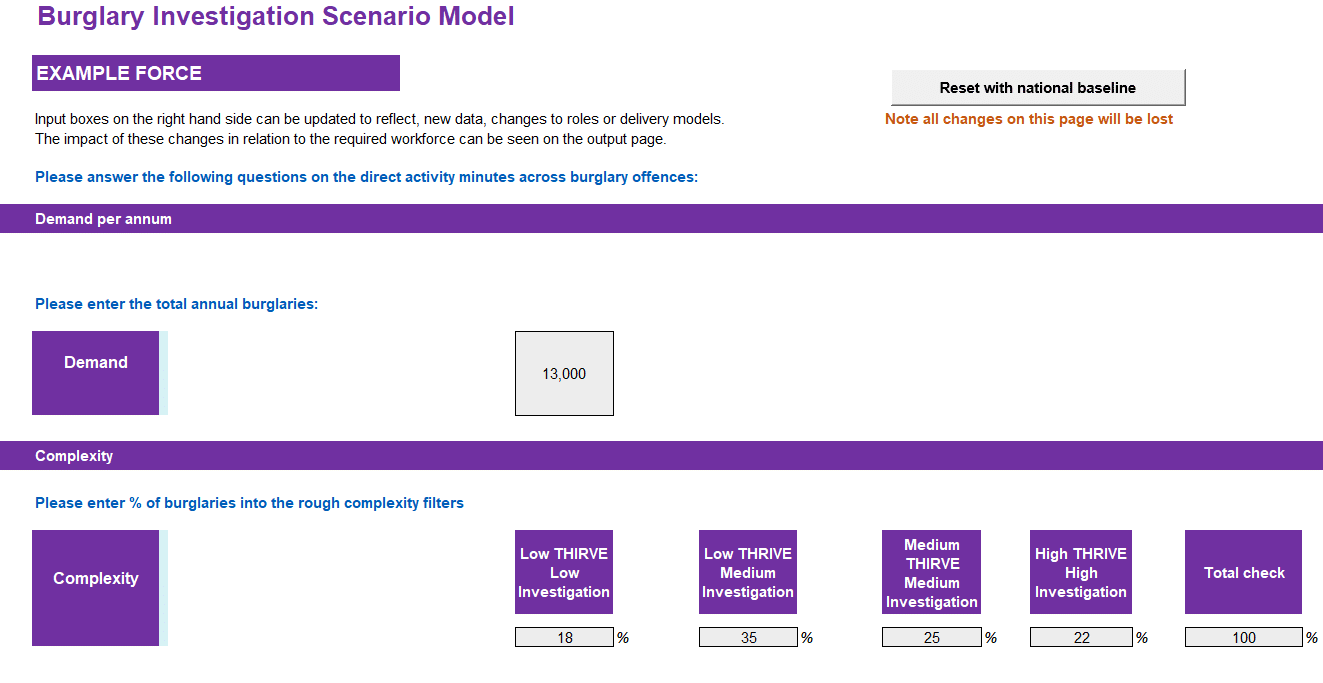
Tracking capacity requires you to understand trends in demand and to have developed systems for assessing and deploying your workforce to meet them. Scenario planning may help you understand potential future configurations, and service and role design can help make sure that you have the skills needed from your workforce at the right level of capacity.
Below is a mock up example of a demand scenario tool our workforce planning experts use with clients.
Workforce planning is often described as having the right people, in the right place, at the right time. What this doesn’t specify is what they need to be enabled to succeed where they are deployed.
This is why organisations need to understand not only the skills and capabilities that they need to deliver services, but also demand so that they can plan the workforce capacity required.
Capacity is a major tenet in resilience – being able to reconfigure your resources to meet changes or disruptions and having redundant capacity or plans to increase or decrease capacity in an agile manor, is an enabling behaviour (ISO22336 2024).
Effective workforce planning therefore becomes a key part of organisational resilience and business continuity planning, an increasingly essential public sector consideration.
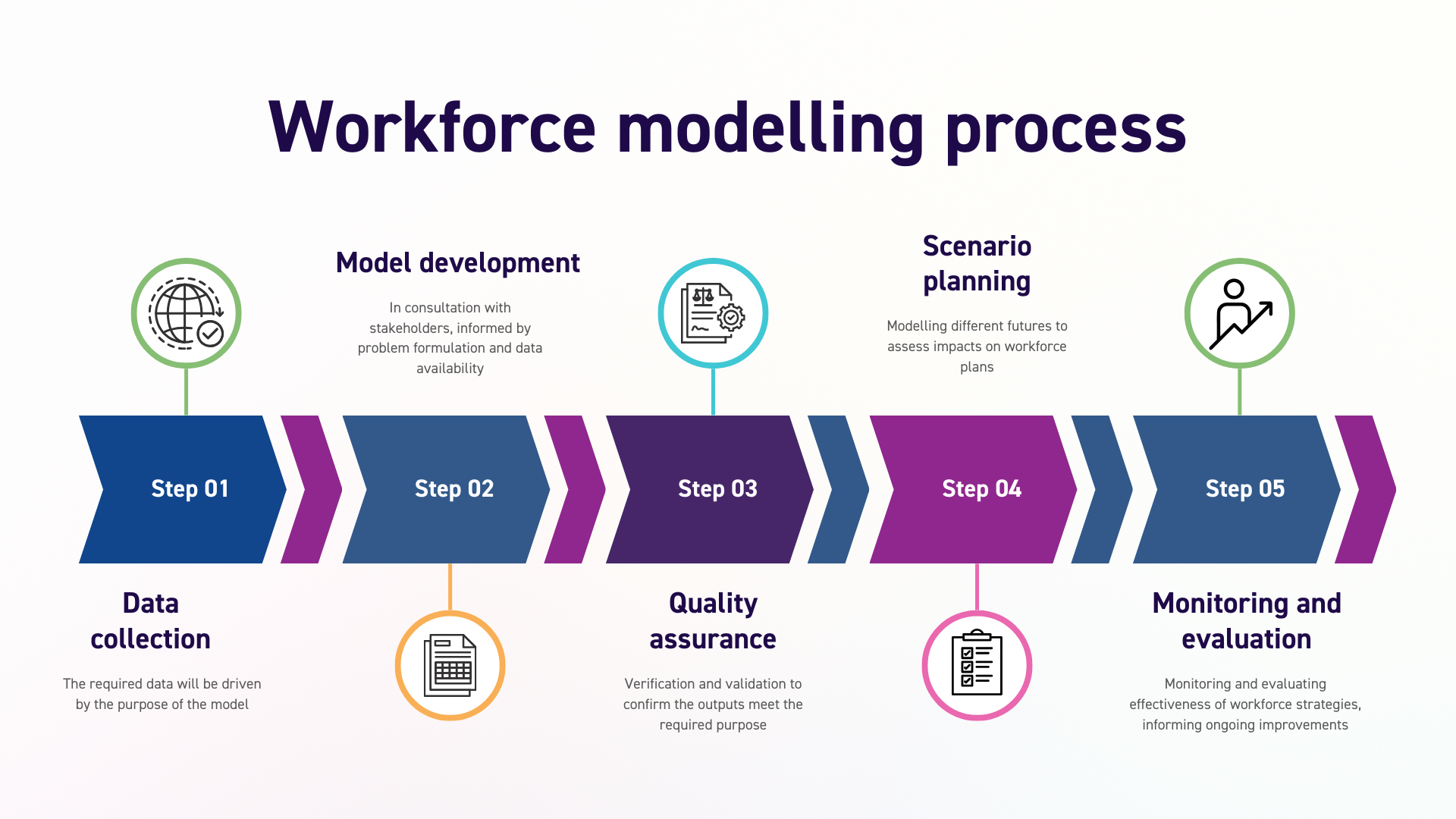
Analysis of workforce supply and demand should be deployed to understand both capability and capacity within public services. Workforce modelling can be developed to define the required workforce (demand), understand workforce availability (supply) or, ideally, both.
The temptation with workforce modelling is to jump to a solution without first defining what you are trying to achieve. In resilience – either operational or organisational – you should look to your risks. These risks should inform and shape the objectives you’re aiming to achieve, serving as the foundation for mapping resilience effectively.
We recommend that organisations take a structured and evidence-based approach to workforce modelling.

Understanding organisational capability and capacity is a complex subject. Skills for Justice are strategic workforce planning experts, helping organisations develop the workforce required to deliver efficient and effective public services.
To better understand your distinct organisational needs, speak to our workforce planning team.

18.12.24
What does the 10-Year Prison Capacity Strategy tell us about the short-term prospects for the...

3.07.25
At the recent Modernising Criminal Justice Conference, representatives from across the sector came together to...

11.06.25
In the justice sector, organisations face increasing pressure to improve efficiency, foster collaboration, and achieve...