Published by Skills for Justice

Published by Skills for Justice
Date 01.05.26


Policing has made significant progress in supporting women, but many forces still cannot confidently answer a critical question: where, when and why are we losing them?
When I joined the police service over twenty years ago, later serving as a Detective Inspector and working in workforce and inclusion roles, the culture looked very different. Leadership was largely hierarchical, expectations were fixed, and inclusion was not a central consideration. If you didn’t fit the mould, you adapted, or you left.
There were few visible female role models in senior positions. Progression pathways were unclear, and conversations around wellbeing, flexibility, or long-term career sustainability were limited.
While progress has been made, the persistence of these questions points to a deeper challenge – one that requires both better insight and stronger leadership action.
There is no doubt that policing today is more open, reflective and inclusive than it was two decades ago.
We now see:
These changes have made a meaningful difference, particularly in attracting and retaining talented individuals.
However, policing remains a demanding profession. Cultural change takes time, and progress is not always consistent. Across forces, there are still challenges in ensuring that women are supported not only to join policing, but to develop, progress and remain.
From my experience, it is often at key transition points – returning from maternity leave, stepping into leadership, or balancing operational demands with personal commitments – that these challenges become most visible.
Many organisations have invested in initiatives designed to support women in policing – mentoring schemes, staff support networks, leadership programmes and flexible working policies.
These are all valuable. But without a clear understanding of workforce dynamics, they can only go so far.
To make meaningful progress, organisations need to be able to answer three key questions with confidence:
These questions shift the focus from activity to impact. They require organisations to move beyond assumptions and towards evidence-based decision-making.
Workforce planning provides the structure and discipline needed to answer these questions effectively.
Done well, it enables organisations to:
Crucially, it allows forces to examine where women sit within the organisation, and where they do not, and to understand the factors influencing those patterns.
However, maturity in workforce planning varies significantly across policing. While access to workforce and demand data has improved, many organisations still face challenges in translating that data into actionable insight. Issues such as data quality, governance and analytical capability can all limit progress.
We are currently working in partnership with the National Police Chiefs’ Council (NPCC) to support a more consistent and strategic approach to workforce planning across policing.
Through a pilot programme with four forces, this work is focused on:
The aim is to create a more coherent national approach, one that aligns workforce data, demand forecasting, financial planning and strategic priorities.
While workforce planning provides the evidence base, leadership determines how that evidence is translated into action.
The retention and progression of women in policing is shaped not only by policies, but by the behaviours, decisions and accountability of leadership at all levels. This includes the behaviours leaders model, the decisions they make about resourcing and development, and the extent to which they are held accountable for outcomes.
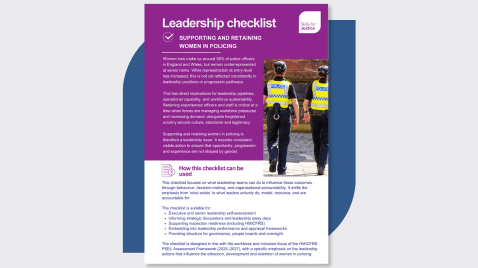
To support this, we have developed a leadership checklist for supporting and retaining women in policing. The checklist is designed to shift the emphasis from what policies exist to what leaders actively do.
Aligned with the HMICFRS PEEL Assessment Framework (2025–2027) and structured around ten key areas, the checklist is intended for use by executive and senior leadership teams as a self-assessment tool, a framework for strategic discussion, or a prompt for people boards, governance structures and leadership development activity.
To learn more about our work and access supporting resources:


6.03.25
This International Women’s Day, we interviewed our very own consultant Tam Whipp, who joined Skills...
5.03.26
Women have worked hard over the last 2 centuries to break barriers in policing, now...
8.03.23
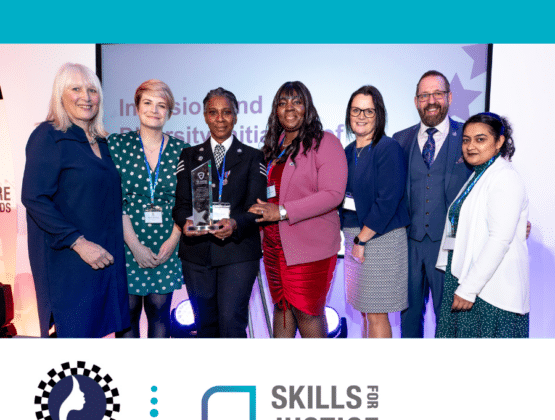
Meet Sam and Samantha, the dynamic duo behind Women of Colour in Policing (WoCiP).
17.04.26
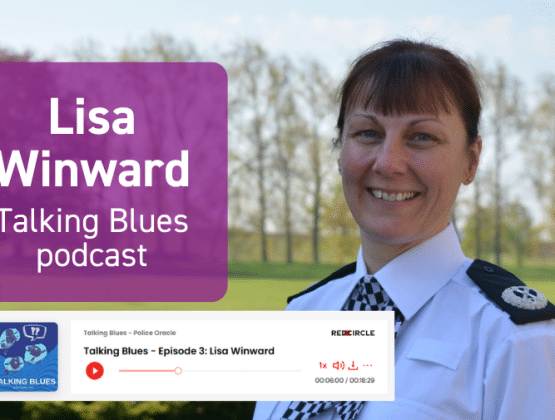
Discover Lisa Winward’s reflections on joining policing in the 1990s, the challenges and progress since,...
25.05.23
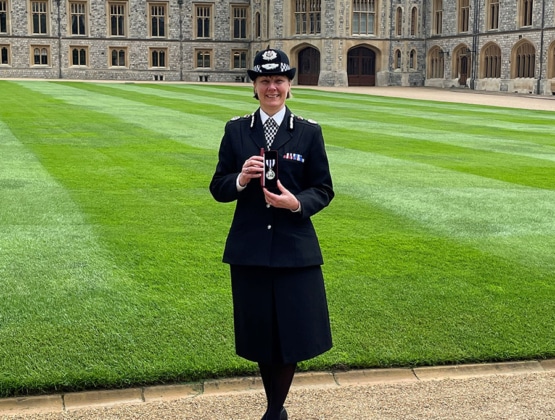
Skills for Justice (part of The Workforce Development Trust) trustee Lisa Winward has received special...