Published by Skills for Justice

Published by Skills for Justice
Date 28.05.26


The UK National Threat Level has recently been raised to SEVERE, meaning a terrorist attack is considered highly likely. Counter Terrorism Policing has been clear in its public messaging: people should remain “alert but not alarmed.”
That distinction matters. This is not a call for fear or panic, but for preparedness – for organisations, workforces and public-facing sectors to recognise that effective public safety depends on teams knowing what to look for, how to respond, and how to act calmly and consistently when something does not feel right.
For employers responsible for public-facing environments, this means ensuring staff have the awareness and capability to make competent decisions under pressure, whether they work in retail, hospitality, healthcare, transport, events, tourism or other customer-facing settings.
The Terrorism (Protection of Premises) Act 2025 (also known as Martyn’s Law) exists because the threat is real and public places have repeatedly been targeted. The Home Office states that since March 2017, the UK has experienced or disrupted a total of 58 terrorist attacks and late-stage plots, highlighting the continued targeting of publicly accessible locations across a wide range of sectors. Against this backdrop, the statutory guidance is intended to strengthen protective security and preparedness across premises and events in scope of the Act.
That is why the public message around the threat level matters so much. “Remain alert but not alarmed” is not passive language; it is a practical instruction. It means people should be observant, informed and ready to act without losing the calm judgement essential during a real incident.
At its core, the Act reflects a whole-of-society approach to public safety and preparedness. Public protection cannot sit solely with security teams, policing or emergency responders. It depends on organisations and frontline staff being prepared, alert and able to respond effectively within their own environments, which – as the guidance suggests – is not only about having procedures on paper, but about ensuring staff receive training, learning and instruction that is:
This shift from documented procedures to practical implementation is critical because real-world incidents rarely unfold neatly or predictably.
After all, preparedness is not about eliminating risk. It is about ensuring teams can respond when it matters most – calmly, confidently and consistently.
Public-facing organisations have sometimes been guilty of assuming protective security is someone else’s responsibility – something relevant only to major venues, high-profile events or dedicated security teams. But the current threat level, alongside the evidence underpinning the Act, directly challenges that outdated assumption.
Counter Terrorism Policing and MI5 have both highlighted the increasing complexity and breadth of threats facing the UK, driven by Islamist terrorism, Extreme Right-Wing terrorism and state-linked threats. Since the start of 2020, they have disrupted 19 late-stage attack plots and intervened in many hundreds of developing threats.
At the same time, many incidents that threaten public safety are not formally categorised as terrorism but still require exactly the same qualities from organisations and staff: vigilance, situational awareness, confident decision-making, and effective operational response.
That is why the guidance places such emphasis on baseline awareness across all staff and not only those with formal security responsibilities. In practice, frontline employees are often the first people to notice unusual behaviour, identify vulnerabilities or escalate concerns. In busy, high-footfall environments, that awareness can make a critical difference.
One of the clearest examples of why this matters comes from Philip Moore, one of our expert trainers delivering the Level 3 Award in Counter-Terrorism Protective Security and Preparedness (CTPSaP).
Reflecting on a recent high-profile event, he described how effective planning and prepared personnel prevented what could have become a major incident:
“At a recent very high-profile event, a suspect was identified trying to gain unauthorised access to a secure site. Because of the plan, the attempt was rapidly identified, assessed and prevented. All the different parties and processes worked quickly, effectively and collaboratively. No time was lost. Otherwise, the person would have got in.”
He continued:
“At best, the result would have been a major embarrassment and the loss of public confidence. At worst, it could have led to multiple deaths.”
Perhaps most importantly, he added:
“Very often the hallmark of a successful plan is that you know something happened, but the public don’t.”
That is the reality of effective preparedness. The strongest public safety outcomes are often the incidents that never fully materialise because alert staff, clear procedures and coordinated responses prevented escalation before harm occurred.
There is also an important connection between preparedness and customer-facing capability that is often overlooked.
People 1st International has decades of experience supporting workforce development across hospitality, retail, tourism, travel and events, including delivery of WorldHost customer service training for major national events such as the London 2012 Olympic and Paralympic Games.
Large-scale public events like these depend on more than logistics and operations. They rely on staff who can:
In reality, excellent customer experience and effective public safety preparedness often rely on the same underlying workforce capabilities: awareness, communication, judgement, consistency, and confidence in responding appropriately.
A whole-of-society approach to public safety requires organisations to think about preparedness across all fronts – not only through security measures, but through workforce capability, culture and operational readiness.
Through our parent organisation, The Workforce Development Trust, we are the guardians of the National Occupational Standards (NOS) for Resilience and Emergencies – the nationally recognised standards that define the knowledge, skills and behaviours needed to prepare for, respond to and recover from emergencies and major incidents.
This is particularly significant in the context of the Terrorism (Protection of Premises) Act 2025, because the statutory guidance places strong emphasis on practical capability, role-appropriate learning and preparedness embedded across organisations – not isolated within security teams.
Developed in partnership with the UK Resilience Academy, the NOS framework supports exactly this approach by helping organisations build consistent, real-world capability across roles, sectors and operating environments.
At a time when the UK threat level is SEVERE, preparedness depends not only on procedures, but on people having the competence and confidence to respond effectively under pressure.
That is also why Skills for Justice, Skills for Health and People 1st International are working together to support organisations in building practical, role-specific capability across public-facing sectors.
Each organisation brings distinct but complementary expertise:
Together, this supports a more joined-up approach to preparedness – one that reflects the operational realities, workforce pressures and customer-facing nature of different environments. Because, as we’ve established, preparedness is not solely a policing or security issue; it’s a workforce issue. It’s about ensuring people across sectors understand what risks may look like, how procedures operate in practice, and how to respond effectively and confidently in the environments they work within every day.
With the threat level now at SEVERE, organisations should not only be focusing on compliance deadlines or minimum requirements. They should be identifying what level of awareness all staff need; which roles require deeper, applied capability; and how their procedures translate into real-world action. They need to be evaluating whether staff are prepared to respond consistently under pressure and if any current training reflects their actual operating environment.
The statutory guidance is clear that preparedness must be proportionate, practical and tailored to role and environment, and building that capability takes time.
Skills for Justice, Skills for Health and People 1st International work together to support organisations in strengthening public safety capability across public-facing sectors.
Our approach reflects the principle set out within the statutory guidance: that learning should be appropriate to role, tailored to environment, and support effective implementation in practice.
This includes:

Foundational online learning designed to build consistent baseline awareness across the workforce, tailored to the realities of sectors such as healthcare, hospitality, retail, events and facilities.

Structured, applied learning designed to support those with responsibilities for protective security, preparedness and operational response – including Responsible Persons and Responsible Officers within qualifying premises and events.

Tailored training – online, in-person, or blended – designed around your operating environment, workforce roles and procedures, supporting organisations to strengthen capability at the intersection of risk preparedness, operational response and customer experience.
The increase in the national threat level is a reminder that public safety preparedness cannot be treated as theoretical or distant.
The message from Counter Terrorism Policing remains clear: remain alert, but not alarmed.
For organisations, that means moving beyond policies and procedures alone to build workforces that are prepared, aware and capable of responding effectively in the moments that matter most.
Because while good planning matters, preparedness ultimately depends on people – informed, trained and prepared staff who can make effective decisions under pressure and respond calmly and consistently in real-world situations.
That is why a whole-of-society approach to public safety ultimately depends on a whole-workforce approach to preparedness.
From 1 August 2026, the SFJ Awards Counter-Terrorism Protective Security and Preparedness (CTPSaP) qualification is also available in Scotland as the SCQF Level 7 Award in Counter-Terrorism Protective Security and Preparedness. The Level 3 Award continues to apply in England, Wales and Northern Ireland. Find out more about CTPSaP training across the UK with Skills for Justice.
Counter-Terrorism Protective Security and Preparedness (CTPSaP) is a nationally recognised qualification designed to provide learners with the knowledge, skills, and understanding of terrorist attack methodologies, how to assess the likelihood of such threats, and the mitigation strategies available to reduce risk.
Following the introduction of the Terrorism (Protection of Premises) Act 2025 (also known as Martyn’s Law), protective security has become an increasingly important professional standard, while organisational preparedness has become a key responsibility.
Developed by SFJ Awards in partnership with the National Counter-Terrorism Security Office (NaCTSO), CTPSaP is the only qualification endorsed by Counter-Terrorism Policing.
CTPSaP is available through different qualification levels depending on where you are based in the UK: the SFJ Awards Level 3 Award applies in England, Wales and Northern Ireland, while the SFJ Awards SCQF Level 7 Award applies in Scotland.
CTPSaP is the acronym for the SFJ Awards qualification in Counter-Terrorism Protective Security and Preparedness.
The Terrorism (Protection of Premises) Act 2025, also known as Martyn’s Law, received Royal Assent on 3 April 2025.
It introduced new legal duties for certain premises and events across the UK to improve security and preparedness against terrorism.
Martyn’s Law is the common name for the Terrorism (Protection of Premises) Act 2025, which requires certain public venues and events in the UK to take proportionate steps to improve security and preparedness for potential terrorist attacks.
The Terrorism (Protection of Premises) Act 2025 (also known as Martyn’s Law) applies to publicly accessible premises and events in the UK where 200 or more people may be present. It places legal duties on those responsible for these locations – individuals, organisations and companies – with requirements that increase according to venue size and level of risk.
There are two tiers:
Standard Tier (200-799 people) – Publicly accessible premises such as retail, restaurants, entertainment venues, museums, galleries, and places of worship etc.
Enhanced Tier (800+ people) – Larger venues and events in high-capacity crowds.
No qualification or training on its own will make a venue, site or organisation compliant.
Compliance is about more than this. However, this qualification provides an excellent foundation of knowledge from which organisations can develop a counter-terrorism risk assessment and preparedness plan as outlined in the requirements of Martyn’s Law.
Skills for Justice Training is an approved training provider for the SFJ Awards Counter-Terrorism Protective Security and Preparedness (CTPSaP) qualification.
We deliver CTPSaP training through scheduled open cohorts across the UK, as well as dedicated organisational delivery for employers who want to train a group of learners at their own location.
The qualification available depends on where you are based:
• England, Wales and Northern Ireland: SFJ Awards Level 3 Award in Counter-Terrorism Protective Security and Preparedness
• Scotland: SFJ Awards Level 7 (SCQF) Award in Counter-Terrorism Protective Security and Preparedness
You can book onto an upcoming open cohort or contact us to discuss dedicated organisational delivery for your team.
As of 30 April 2026, the UK National Threat Level was raised to SEVERE. This means a terrorist attack is highly likely.
When the threat level is SEVERE, organisations should move to a heightened state of security, review contingency plans and ensure staff vigilance.
Find out more about how to review your security plans in response to the increased national threat level.
Yes, it is highly recommended and, in many cases, mandatory that organisations in the UK undertake counter-terrorism training, especially with the introduction of new legislation like the Terrorism (Protection of Premises) Act 2025 (also known as Martyn’s Law).
For more advice and guidance on counter-terrorism training, please visit Protect UK.
The Section 27 guidance for the Terrorism (Protection of Premises) Act 2025 (Martyn’s Law) was published in April 2026. It provides mandatory, actionable advice to help duty holders understand and comply with their legal obligations relating to security and public safety at qualifying premises and events.
For most places of worship, the government has stated that the requirements are not intended to be onerous or require significant physical investment.
A key consideration is whether it is reasonable to expect that 200 or more individuals may be present at the same time, even if only occasionally. Where this threshold is met, the premises is likely to fall within the scope of the Standard Tier under Martyn’s Law.
CTPSaP training is delivered across the UK, with the qualification aligned to the relevant national qualifications framework:
• England, Wales and Northern Ireland: SFJ Awards Level 3 Award in Counter-Terrorism Protective Security and Preparedness
• Scotland: SFJ Awards Level 7 (SCQF) Award in Counter-Terrorism Protective Security and Preparedness
Both qualifications are designed to develop knowledge and practical capability in counter-terrorism protective security and preparedness.
13.05.26
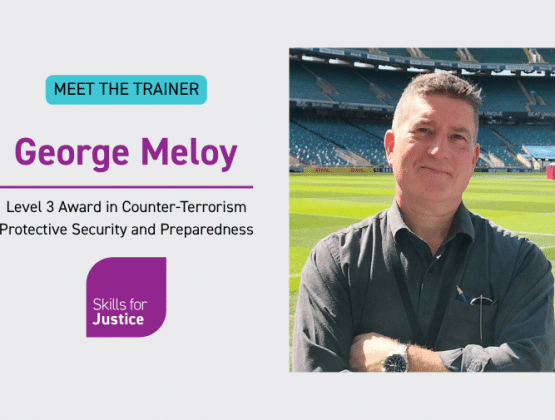
Meet George Meloy, Level 3 Award in Counter Terrorism trainer, sharing insights on preparedness and...

30.03.26
Book onto the Level 3 Award in Counter-Terrorism Protective Security and Preparedness qualification with Skills...
22.04.26
How organisations move from awareness to action in counter-terrorism protective security, with practical insights from...

23.04.26
Organisations preparing for the Terrorism (Protection of Premises) Act 2025 must shift from awareness to...
16.04.26
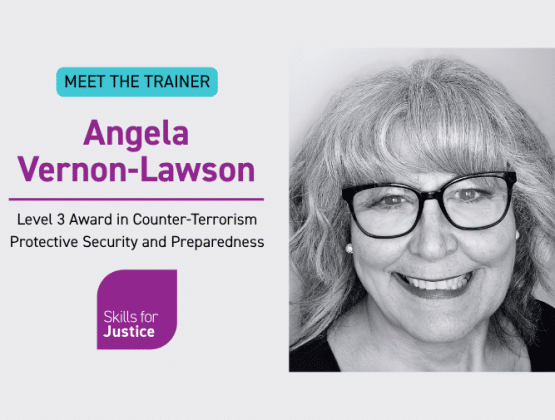
Angela Vernon-Lawson shares how organisations can build a culture of vigilance, empowering people - not...

26.03.25
Martyn’s Law – formally The Terrorism (Protection of Premises) Bill – is a bill currently...

10.07.25
We explore what the impact of Martyn's Law are for courts and how courts can...

17.06.25
Martyn’s Law improves venue security, fosters collaboration with emergency services, and aligns with JESIP to...